
Building Cohorts
Bridging Disciplines, Experiences, and Perspectives
Building Cohorts
Bridging Disciplines, Experiences, and Perspectives
BUILDING EXPERIENCED COHORTS
Before a fellowship year begins and fellows descend on Washington, DC, a fellowship cohort must be built. The process and considerations for selecting fellows has evolved since 1973 but the ultimate goals has remained the same: identify outstanding mid-career health professionals with an interest in health and health policy.
Mid-career professionals have the expertise to make a difference,
and enough time left in their career to do the work.
The focus on mid-career professionals is key to the program’s ultimate goal to improve the health of the nation, a goal that has remained consistent across 50 years. Mid-career health professionals are experts in their field and can bring important insights into the policy making process during their placements. In addition, they tend to have both the experience and standing within their home institution to meaningfully apply what they learned in their year in DC, whether that’s creating new courses on health policy to train the next generation, taking on leadership roles in their institution and/or state governments, or establishing new programs and centers with a focus on health policy work.



Selecting the First Six Fellows
In the summer of 1973, the IOM sent more than 3,000 program brochures to academic institutions, members of Congress, agencies of the Executive Branch, and related health organizations to announce the fellowship. In addition, President John Hogness sent invitations to 114 academic health centers and medical schools asking for nominations of candidates. By the end of December 1973, 43 institutions had submitted a nomination.
At its January meeting, the Health Policy Board narrowed the 43 nominations to 12 finalists who they invited to Washington, DC for interviews in March.

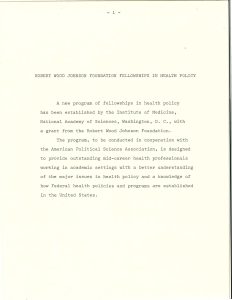

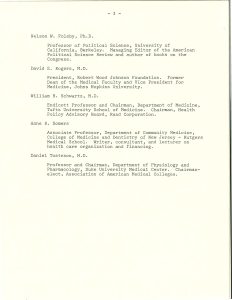

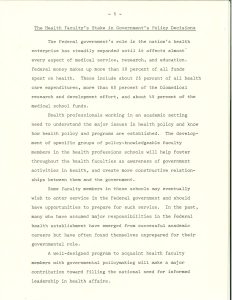
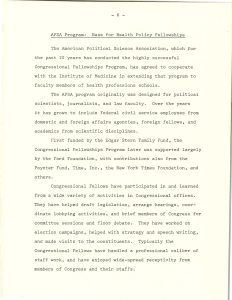
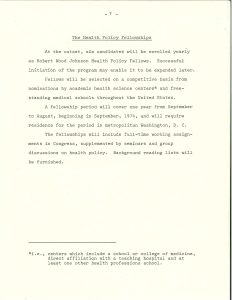
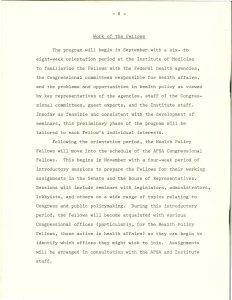
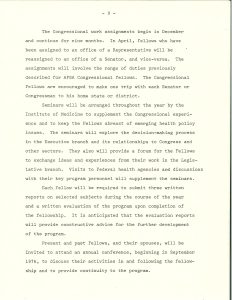
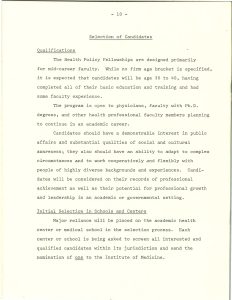
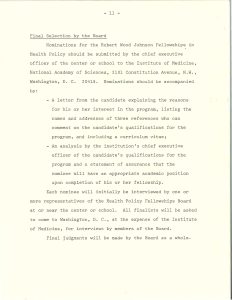
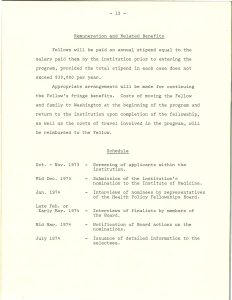
Read the 1973 Booklet introducing the program and calling for nominations. Click on each page to enlarge.
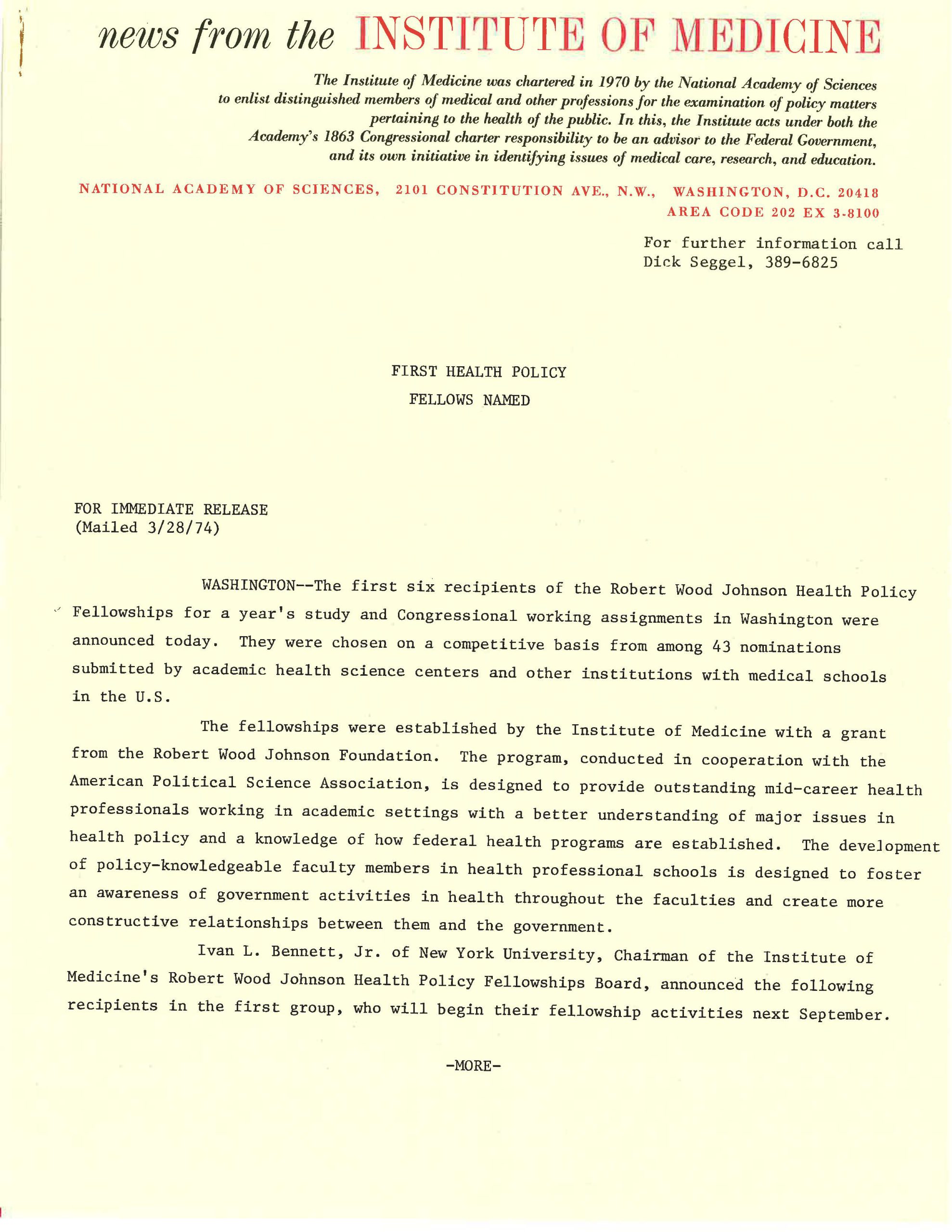

On March 28, 1974, the Institute of Medicine officially announced the selection of the first six Robert Wood Johnson Health Policy Fellows.
- H. David Banta
- Frederick B. Glaser
- Francis M. Henderson
- David J. Sanchez, Jr.
- Robert J. Schlegel
- Arthur H. Viseltear
1974 IOM Press Release announcing the first six fellows. Click to enlarge each page.
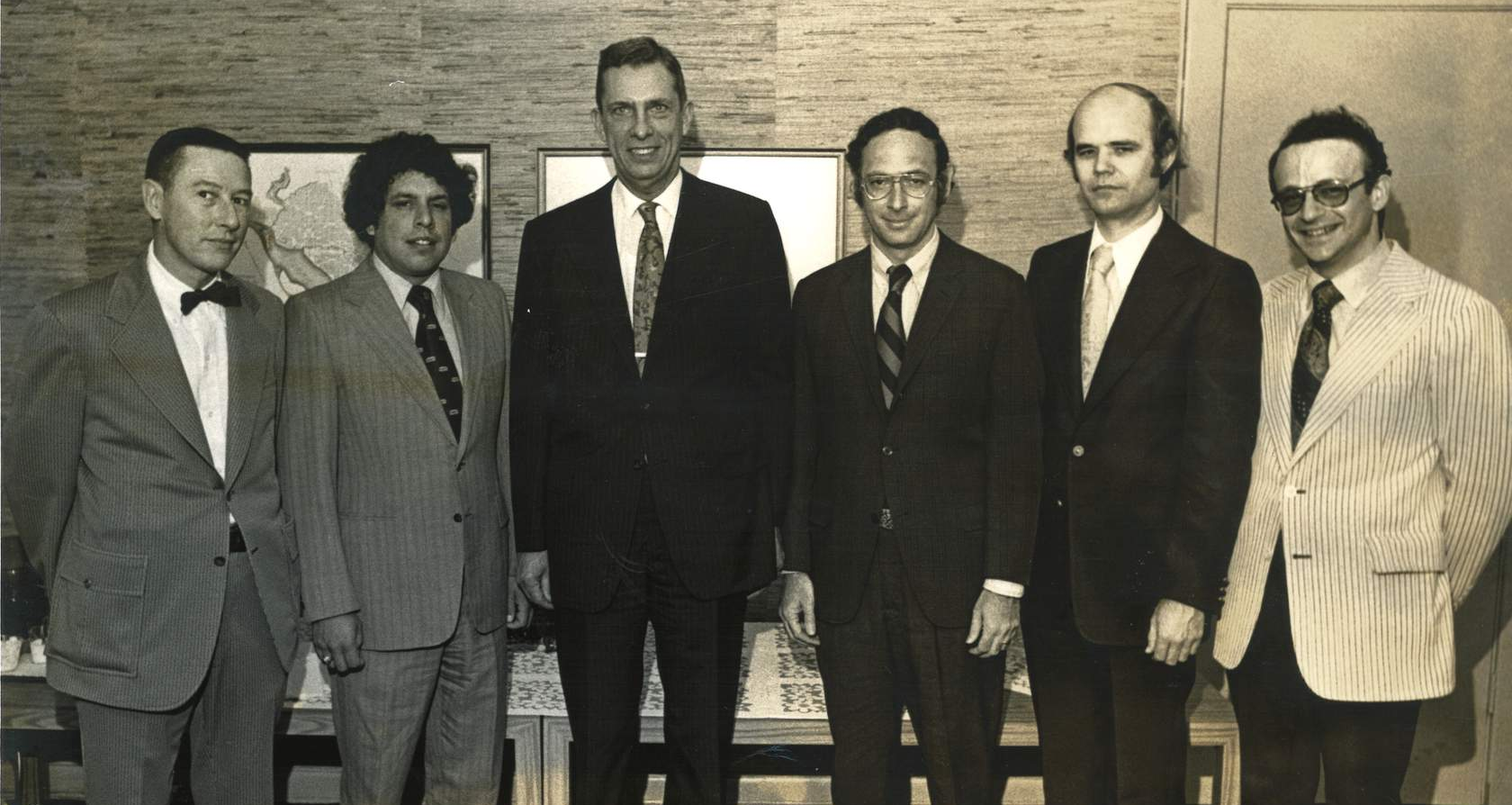
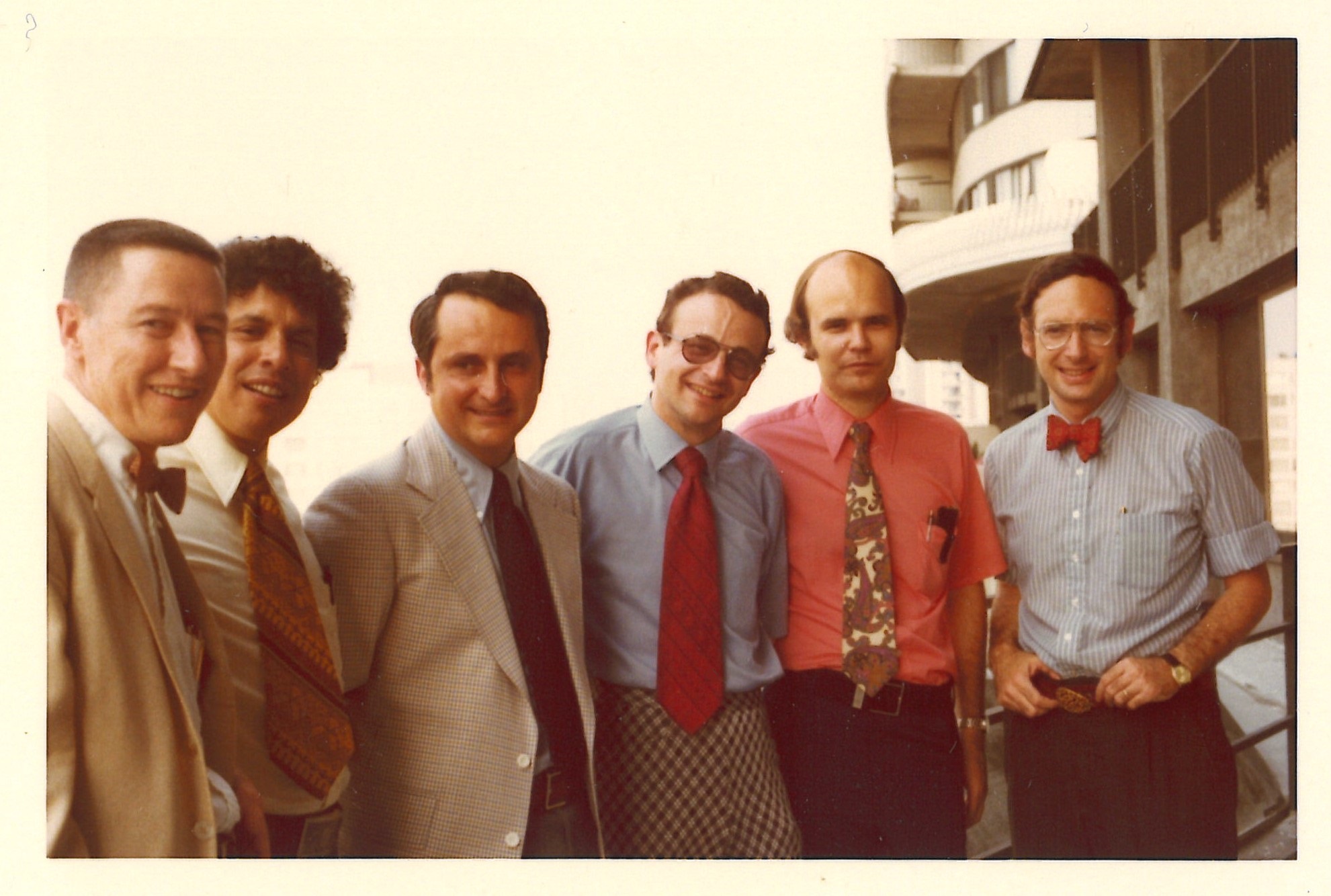
Five of the six members of the 1974-75 cohort with Program Director Richard Seggel (tallest).
Expanding the Voices at the Table
Since the first day of orientation in September 1974, the program has expanded the people and ideas at the health policy table. Initially, this expansion focused on helping clinicians and nurses bring their health expertise to policy-making table. Over the next few decades, as the health community began to realize that health is broader than health care and health care’s associated clinicians and nurses, so too did the program.
“We began to recognize that health doesn’t just belong to health professionals. It belongs to so many other concerned and active leaders in this country that we opened our doors.”
— Marie Michnich, 2002-17 Program Director and 1986-87 fellow
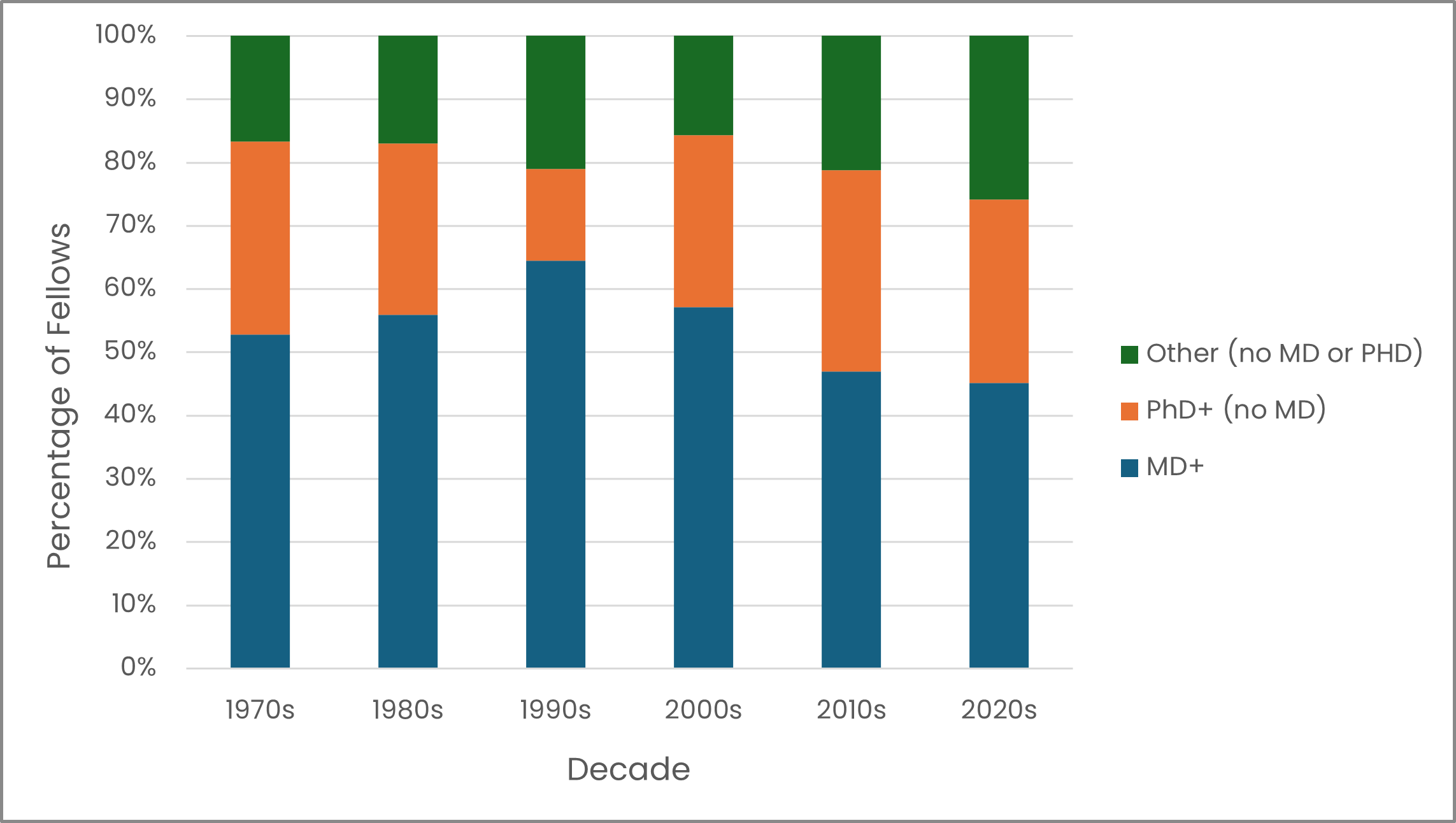
Throughout its first 50 years, the RWJF Health Policy Fellows program has continually expanded its eligibility to better reflect society’s understanding of what and who determines the nation’s health.
Initially open only to academic medical faculty at select institutions, the program has gradually expanded to welcome professionals from across health and healthcare. Today the program encourages applicants from a broad array of health fields, including: medicine, nursing, public health, law, dentistry, economics and other social sciences (especially disciplines related to factors that influence population health, such as housing, transportation, nutrition, wealth, employment, education, and environmental and community conditions), health services and social work/behavioral health, and other health professions.
Click to open the sections below to see how eligibility criteria has expanded over five decades, reflecting a broader understanding of who influences health in America.
1973: Defining Eligibility in Academia


Throughout the fellowship year, the program staff plans and hosts events to bring the cohort, their families, and sometimes alumni together to catch up and bond. These events have included bar-b-ques at the program directors house the week before the fellowship officially begins, monthly breakfasts at a cafe close to Capitol Hill during the portion of the fellowship that fellows are in their placements, new fellow and alumni happy hours to encourage cross-cohort mingling, and much more.
A 1973 Board memo outlined the original eligibility model, highlighting early selectivity and a narrow definition of who could shape health policy:
“The line obviously had to be drawn somewhere in accordance with definable and understandable criteria, and it was on this basis that the decision was made to set the parameters of the program in terms of academic health centers and other institutions with medical schools—a total of 114 institutions. It was considered highly probable that the mid-career academic faculty members who would most benefit from the fellowship experience would be found in this group of institutions.”
1975: Expanding to Include the Social Sciences
The 1975 program brochure shows the first expansion in eligibility to health professionals in the social sciences. Institutions were still allowed to submit only one nomination each, with the selection process remaining centralized through the Institute of Medicine.
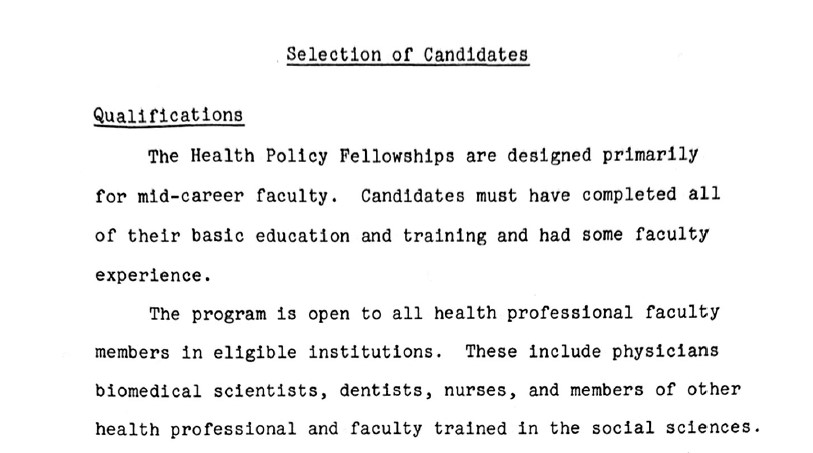
The 1975 program brochure.
1980s: Welcoming Economists into Health
The 1983 brochure explicitly included economics as an eligible field. Fellows continued to be drawn from mid-career academic faculty in health-related disciplines.
The 1983 brochure reflects the Fellowship’s acknowledgment that economic expertise is critical to national health policymaking.
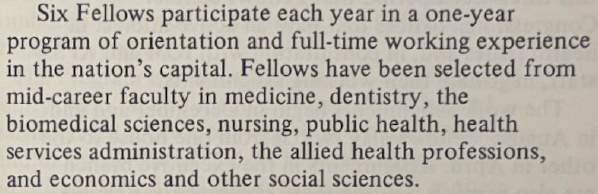
The 1983 program brochure.
1994: Expanding Beyond Academia
To better reflect the changing health marketplace, in 1994, the program expanded the institutions that could nominate a applicant from only academic health centers to include providers and institutions in the health care system, such as HMOs and related community-based organizations.
2009: Everyone Has a Stake in Health Policy
The Fellows program has moved far beyond its original academic clinician roots. Today’s applicants come from public health, nonprofit leadership, government agencies, and academic institutions. Unlike earlier years, candidates can now choose to be sponsored by the National Academy of Medicine or their home institution.
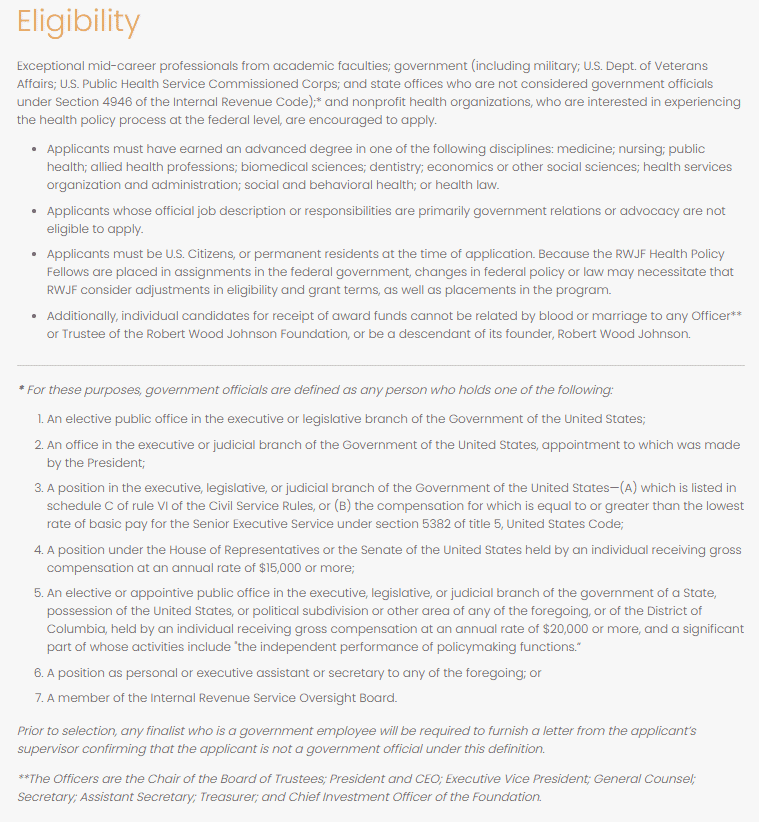
Today’s eligibiligy requirements for the HPF program.


Coming to Washington to
Learn the Process
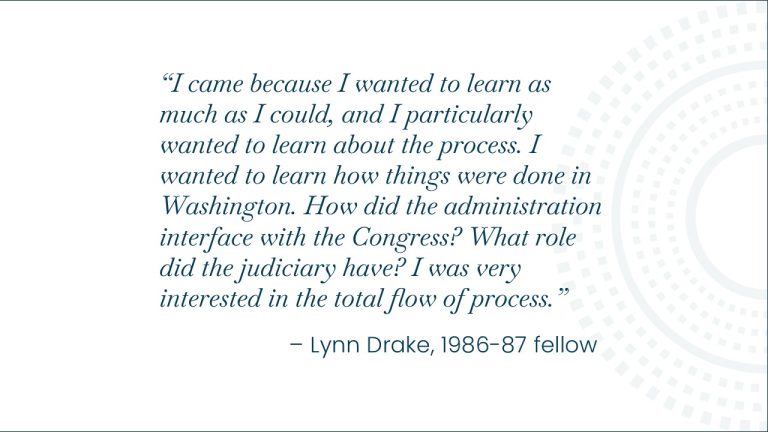
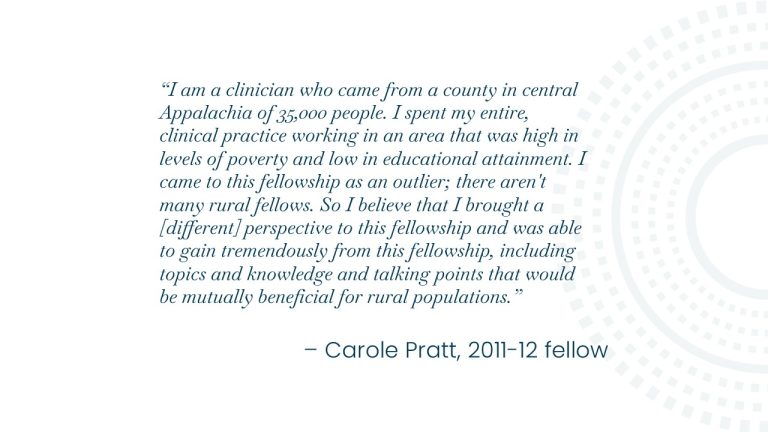
People apply to the RWJF Health Policy Fellows program from across the nation and with diverse backgrounds and disciplines, but accepted fellows all share the same underlying goal: to learn how health policy is made so that they can become more effective at improving the health of the nation.
Fellows applied for many different reasons, but most also said they were motivated by the desire to:
Get patients the care they need
Close health equity gaps
Bring federal resources to home community
Connect with key players in health policy
Impact change on a population level
Bridge research and policy
In Fellows' Own Words:


The Fellowship isn’t just a year in Washington; it’s the start of a lifelong professional network.
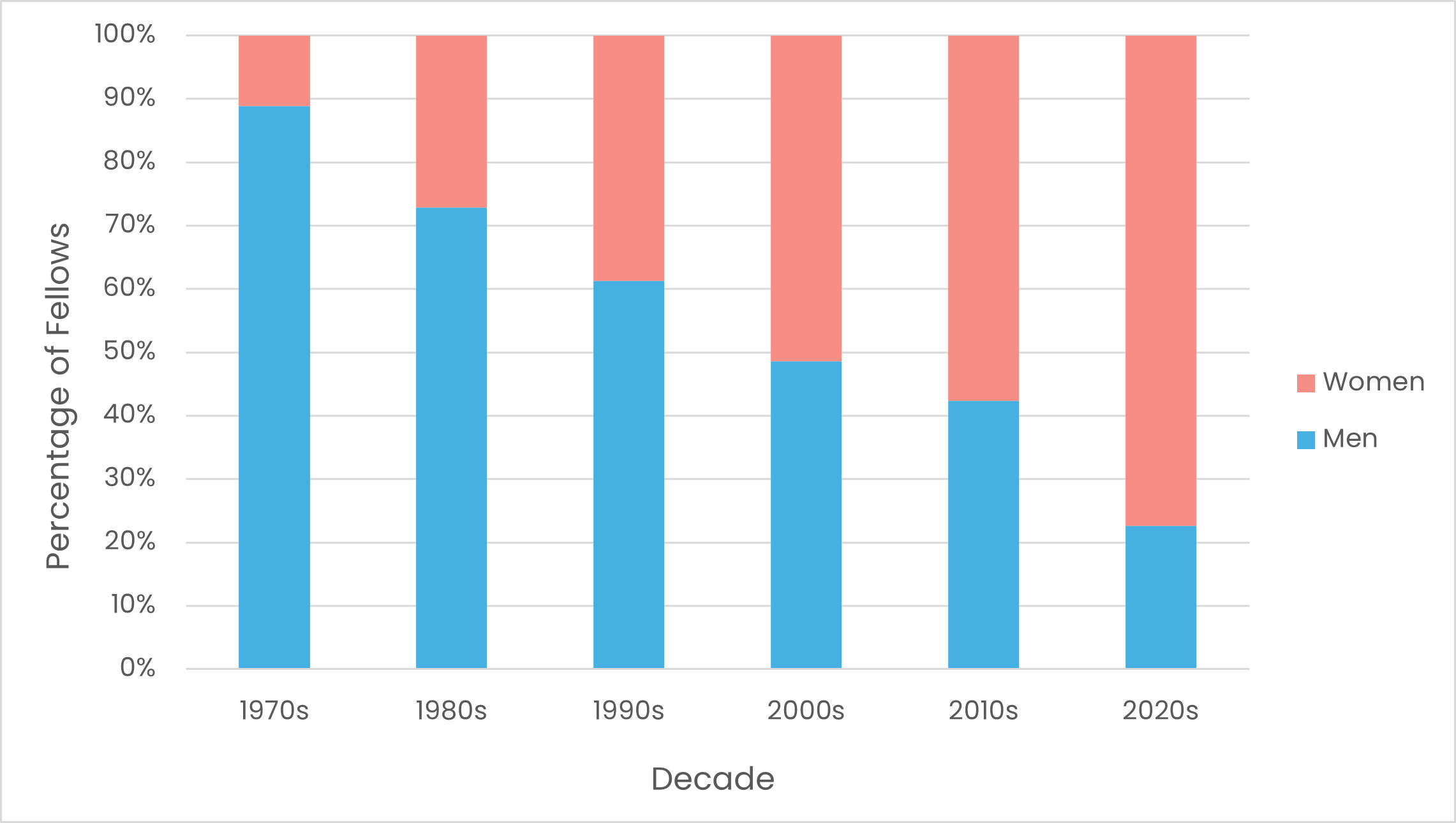
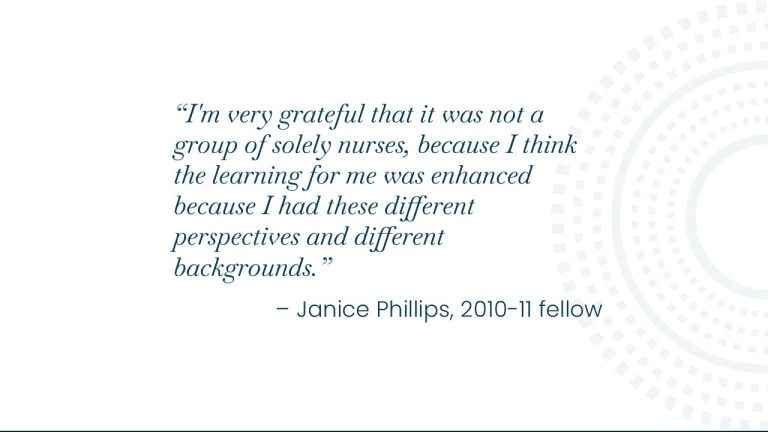
Advisory Board members select cohorts with intention and aim to balance geography, background, political views, and professional focus. The goal is not just to assemble impressive résumés, but to create a group that can challenge and learn from one another.
Fellows often say their peers shaped the experience as much as their placements did. Working alongside professionals from different sectors and regions gave them insight into how health policy plays out across the country. For many, those relationships became long-term sources of support and collaboration.